Nature Sessions That Include Everyone
Not every outdoor session needs saws, wheelbarrows, or physical sweat. When a team is recovering from a demanding quarter or includes colleagues with mobility, fatigue, or sensory-processing needs, quiet observational tasks create deep shared focus.
Designing for Access, Energy Parity, and Choice
Many well-meaning "wellbeing walks" accidentally exclude team members who use mobility aids, struggle with steep unpaved woodland stiles, or find unstructured small-talk while walking for two hours socially exhausting.
Informed by the Field Studies Council (FSC) accessible fieldwork guidelines, the Sensory Trust's inclusive outdoor design standards, and Anna Atkins' 19th-century botanical documentation crafts, our Nature Sessions centre around a sheltered, step-free base table with short optional foraging loops of 50 to 150 metres.
- Predictable sensory environment: No sudden whistle blasts, megaphones, or surprise team announcements.
- High-detail tactile focus: Looking through a 10x jeweller's loupe at lichen structures or threshing dry calendula seed heads gives hands and eyes a calm focal point.
- Real scientific or archival output: Groups submit verified records to national schemes like the UK Pollinator Monitoring Scheme (PoMS) or leave behind a catalogued workplace seed library.
Four Restorative & Observational Workshop Formats
Every session below runs comfortably in 60 to 90 minutes on a sheltered patio, conservatory terrace, or botanical garden lawn.
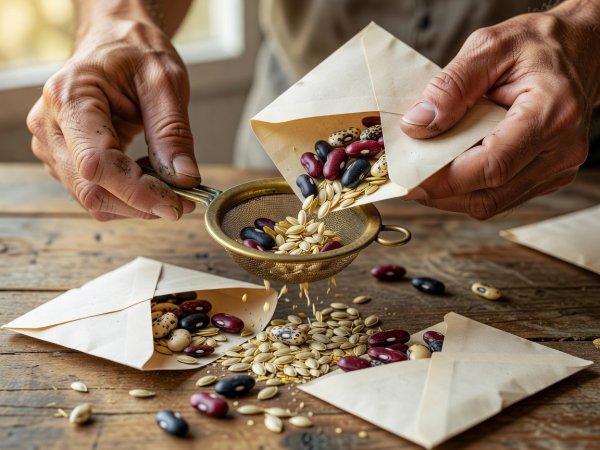
The Activity: Following the Heritage Seed Library (Garden Organic) seed-saving protocols, teams receive dried seed pods of open-pollinated varieties—such as 'Crimson Flowered' broad beans, 'Cherokee Trail of Tears' climbing beans, 'Pot Marigold' calendula, and Welsh onions. Together they thresh, screen with graded brass mesh sieves, winnow chaff, and pack origami glassine envelopes to stock an oak index box for colleagues and local community growers.
Pod Threshers & Sieve Operators
Gently crush dry pods in linen sacks and separate clean seed from stems using 6mm and 2mm woven brass sieves.
Germination & Viability Testers
Set up damp filter-paper Petri dishes for 10-seed sample counts and record moisture levels with silica indicator packs.
Archival Packet Calligraphers
Stamp botanical Latin names, harvest dates, sowing depths, and isolation notes onto unbleached glassine envelopes.
The Activity: Pioneered in 1843 by English botanist Anna Atkins in Photographs of British Algae, cyanotype sun-printing uses safe, pre-coated watercolour rag paper sensitive to UV daylight. Participants collect fallen fern fronds, umbellifer seed heads, and diagnostic leaves, compose collective morphological plates under hinged glass contact frames, expose them in open sky light for 4 to 8 minutes, and rinse them in plain water troughs to reveal deep Prussian tones—Wait, strictly tuned to warm sepia/tannic tea-toned prints using green tea and sodium carbonate baths so the finished herbarium matches warm earthy archives.
Facilitator Note: Adding a brief 3-minute soak in brewed black or green tea converts the print into rich warm umber and sepia botanical plates mounted with linen tape.
The Activity: Using the official UK Pollinator Monitoring Scheme (PoMS) Flower-Insect Timed (FIT) Count methodology or the OPAL Air Quality Lichen index on tree trunks, pairs place a 50cm x 50cm quadrat frame over a patch of flowering dandelion, lavender, or ivy for exactly 10 quiet minutes. One person observes with close-focus binoculars while their partner tallies bumblebees, hoverflies, solitary bees, and beetles on the field sheet.
The Activity: Centred around a copper alembic hydrosol still running gently on an induction plate at the main workbench. Teams harvest fresh lemon verbena, peppermint, rosemary, and chamomile sprigs, weigh botanical charges on precision scales, strip leaves onto drying racks for winter tea jars, and bottle pure botanical room mists in amber glass atomisers.
Access & Comfort Checklist for Nature Sessions
Pathways & Seating
Verify minimum 120cm wide compacted gravel or paved paths with gradients gentler than 1:15. Provide sturdy seats with backrests and armrests every 40 metres, not just backless picnic benches.
Acoustic & Shade Zones
Position the main workbench under dappled tree shade or a canvas awning to eliminate harsh glare on printed identification keys, and keep a quiet bench 15 metres away for anyone who wants a breather.
Magnification & Tactile Tools
Provide clamp-on bench magnifiers alongside handheld loupes so participants with tremors or low vision can examine seeds and leaf veins hands-free.